
Lilac Infused Honey: Folklore, Benefits, and Practical Magic
*contains affiliate links
Lilacs sharing their aroma and beauty is a fleeting experience each spring. Like the unfurling of new leaves, we can depend on them. But then they are gone. This speaks to one of the many meanings people have attached to lilacs: transformation and the temporary nature of life.
While this may seem like an obvious association, a less apparent symbol of lilacs is their use for protection. In fact, historically lilacs were used to protect against evil and negativity. People planted them around their homes to provide safety and welcome calm. (Ashbourne, 2025; Wigington, 2019).
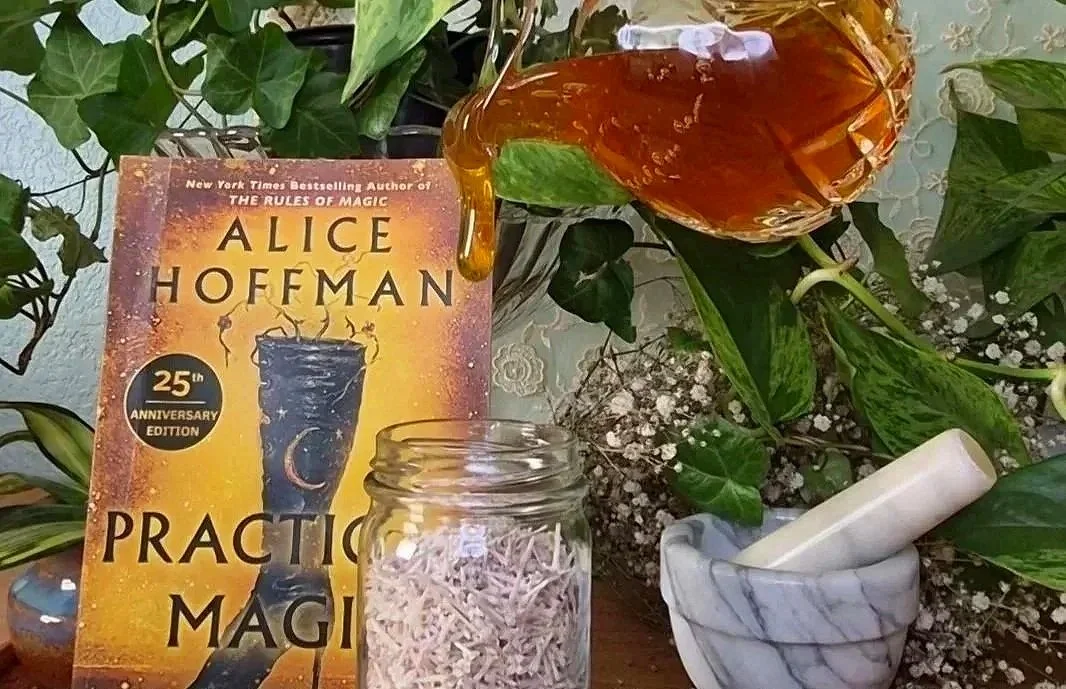
If you have read the book Practical Magic by Alice Hoffman, this all might make you ponder a bit. Lilacs do indeed take up a prominent role in the book (but not the movie!).
Read on for discussion about lilacs in Practical Magic and instructions for making lilac infused honey as well as information about the benefits of lilacs in herbalism.
But be warned, there are a few spoilers ahead….
Skip the spoilers by scrolling to the honey recipe and lilac benefit sections below.

Lilac Flower Symbolism in Practical Magic
In the movie the Owen sisters bury Jimmy under a rose bush, in the book, they bury him underneath, you guessed it, lilacs. And just like in the roses in the movie the lilacs grow vibrantly and abundantly blossom out of season. At first these glorious, fragrant bushes resplendent in purple blossoms, are a wonder to the sisters, and even draw people from the town to come gaze at their blossoms. Perhaps the lilacs are doing their best to protect the Owens family from Jimmy’s evil spirit?
Eventually, Jimmy does break free and the sisters must reckon with him. The fragrance of the lilacs becomes sickeningly overpowering with no escape.
What do you think? Are the lilacs protective at first?
Happily most lilacs do not outstay their welcome while guarding against an evil foe. Their flowers grace our days for a short time and then are gone all too fast. And maybe a little sweetness with those lilacs would have helped the Owen family? In an ode to them and an ode to springtime, I have whipped up lilac infused honey to share!
How to Make Lilac Infused Honey
This preparation is a treasure of spring! Here is a lilac honey recipe to help you make this tasty herbal infused honey in your own home.
Materials
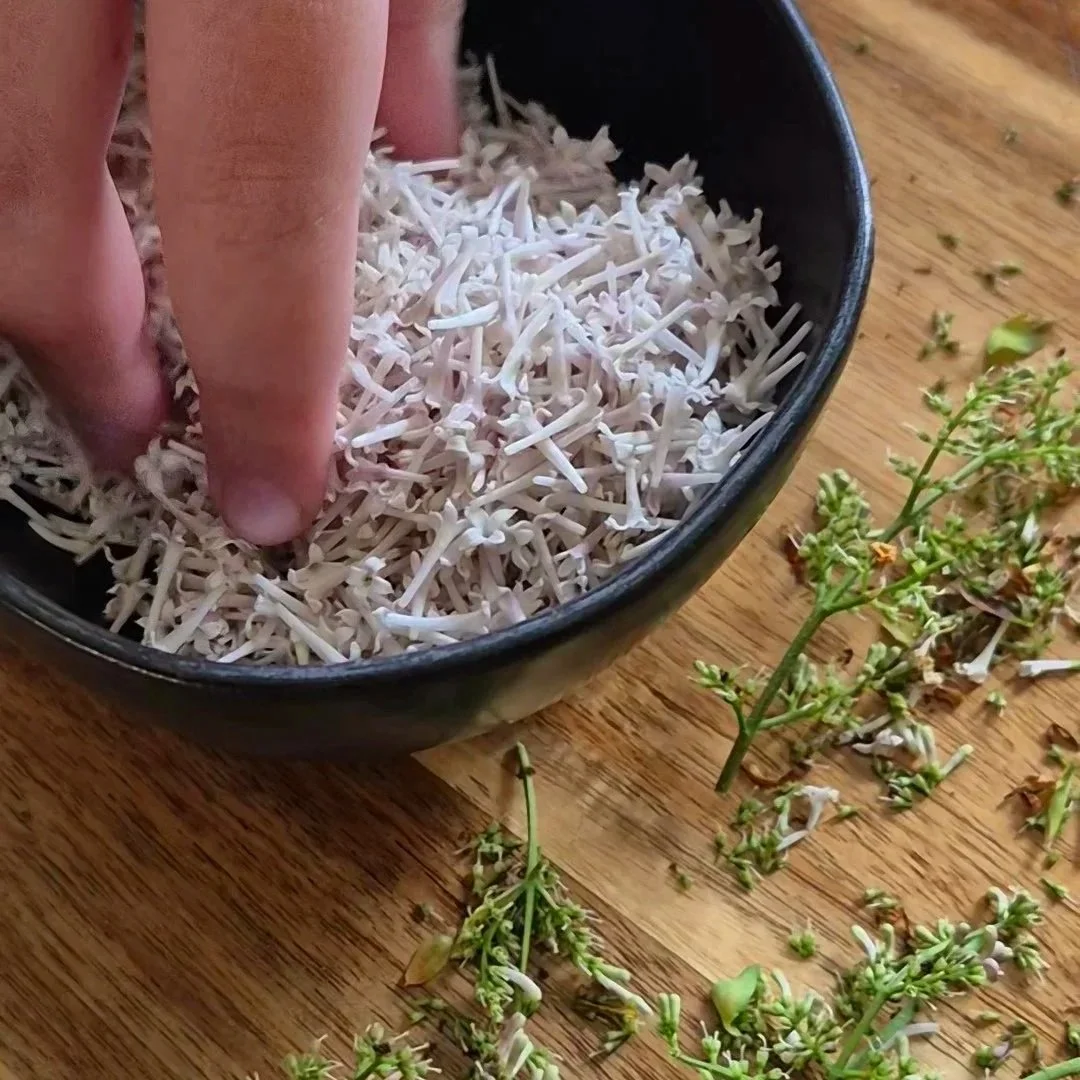
Lilac flowers (Syringa vulgaris)*
Honey
Jar with lid
Knife or chop stick to stir
Instructions
Gather lilac flowers on a dry day from unsprayed bushes.
Shake the flowers to encourage any bugs to exit.
Remove the flowers from the branches and pull off as many of the green bases from the bottom of the flowers as you can. These have a bitter flavor. Don’t worry if you cannot get them all!
Place the flowers in a clean, dry jar, filling the jar ¾ of the way full.
Pour the honey over the top of the flowers, covering the flowers so that they are all submerged.
You may need to stir the flowers into the honey using a very clean, dry knife or chop stick.
Place the lid on top.
Flip the honey jar at least once a day (more is better) to keep the flowers covered in honey. This helps to preserve the flowers and prevent mold.
Because of the moisture in the fresh lilac flowers, your honey may ferment a bit. To help relieve any build up of pressure in the jar, open it once a day to let any pressure escape.
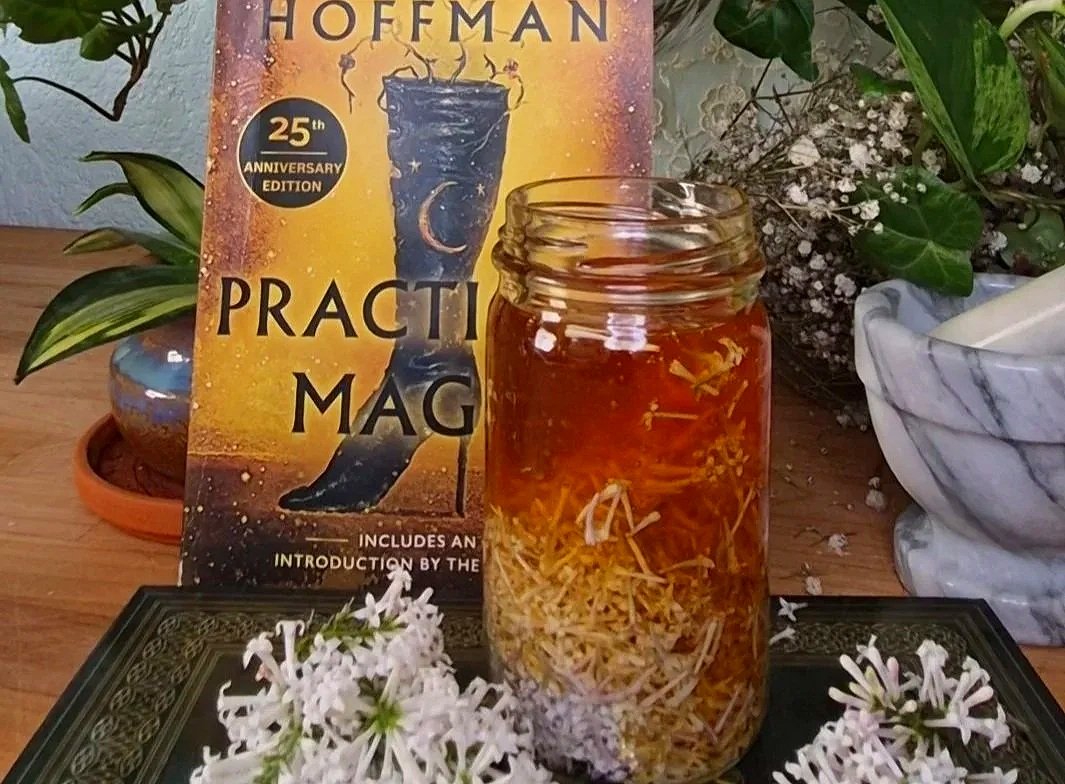
After a week, your honey will be ready! You can either strain the flowers out of the honey or eat them with the honey.
Label with date and contents, and store your honey in the refrigerator and enjoy it within 4 weeks.
Drizzle your lilac honey over biscuits or scones and add it to drinks like lemonade or tea. You can also use it directly in recipes that call for honey. Enjoy!
*Please be sure you are using edible lilac flowers from the common lilac, Syringa vulgaris. Ask a local expert for assistance in identification if needed.
Lilac Flower Benefits in Herbalism
Would you believe that those glorious, fragrant blossoms have a history of use in herbal medicine? First and not surprisingly, as with many fragrant plants, the aromatic property of lilac flowers offers a balm to the nervous system, helping to soothe stress (Bobodzhanov-Corbett, 2023).
Lilac flowers are used to help cool inflammation and fevers. Recent studies have shown that there are active compounds in lilacs, including antioxidants that help to reduce inflammation supporting the body including the cardiovascular system (Woźniak et al, 2018, Bobodzhanov-Corbett, 2023).
This is a wonderful nod to the traditional use of lilacs in helping to ease arthritis inflammation and pain, digestive upset, and fevers in colds and flus. Mrs. M. Grieve also shares that lilacs were used to help address malaria (Grieve, 1971).
The flowers also offer an astringency that can be useful in skin care. Try infusing the flowers in water or witch hazel, to use as a springtime wash for the face or lovely addition to the bath.
Love the magic of herbal honeys?
If you want to move beyond lilacs, I’m releasing my complete Herbal Infused Honey Guide in just a few weeks! It covers everything from fresh vs. dried techniques to herbs well-suited for honey infusions to cozy book and herbal honey combos. Don't miss out—Join Our Newsletter to be the first to know when it drops!
Thank you for joining me on this lilac journey from symbolism and magic, to the sweetness of honey, to uses of this absolutely gorgeous plant! Until next time nerdy fairies, may your honey jar always be full.
References
Ashbourne, Lila. (2025). Lilac Symbolism: What This Elegant Flower Really Means. Retrieved on 4-29-2026 from https://flowersymbolism.org/lilac-symbolism/.
Bobodzhanov-Corbett, Sarah. (2023). Lilac: An Herb of Spring. Retrieved on 5-4-2026 from https://rowanandsage.com/blog/lilac.
Grieve, M. (1971). A Modern Herbal. Dover Publications, New York.
Wigington, Patti. (2019). Lilacs for Love, Protection, and More. Retrieved on 4-29-2026 from https://www.learnreligions.com/lilac-magic-and-folklore-4064885.
Woźniak, M., Michalak, B., Wyszomierska, J., Dudek, M. K., & Kiss, A. K. (2018). Effects of phytochemically characterized extracts from Syringa vulgaris and isolated secoiridoids on mediators of inflammation in a human neutrophil model. Frontiers in Pharmacology, 9, 349. https://doi.org/10.3389/fphar.2018.00349